
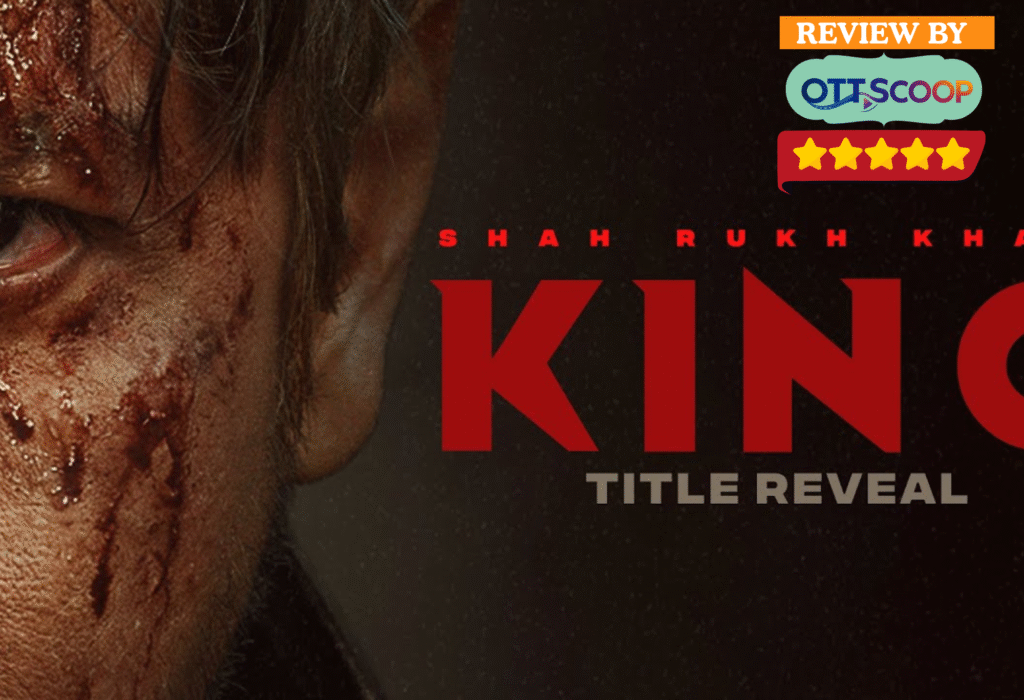
The trailer for KING doesn’t open with noise – it opens with absence. A slow fade-in. A man walking alone. Rain falling like memory. Shah Rukh Khan’s character isn’t introduced with fanfare, but with restraint. He’s not here to reclaim a throne – he’s here to confront the ghosts that built it. His body language is heavy, deliberate. Every step feels like it’s carrying the weight of a broken past. The trailer’s tone is not just cinematic – it’s poetic. It speaks in shadows, in pauses, in glances that linger too long.
Bloodlines and Broken Bonds: The Emotional Engine
At the heart of KING lies a fractured family. Suhana Khan’s character is introduced not through dialogue, but through visual storytelling. A torn photograph. A trembling hand. A stare that holds both love and accusation. Her presence is not decorative – it’s disruptive. She represents the emotional wound that refuses to heal. The trailer hints at a father-daughter relationship strained by betrayal, silence, and possibly abandonment. Their scenes are bathed in golden light and deep shadow – visual metaphors for memory, regret, and the longing to reconnect.
The Antagonist’s Architecture: Abhishek’s Calculated Coldness
Abhishek Bachchan’s character doesn’t explode onto the screen – he infiltrates it. His entrance is quiet, composed, and unnerving. He’s dressed like a man who controls outcomes, not emotions. His dialogue is minimal, but his gaze is surgical. The trailer suggests a shared history with SRK’s character – perhaps as a former ally, now turned adversary. His scenes are framed with glass, steel, and silence – symbols of control, detachment, and danger. He’s not the kind of villain who shouts. He’s the kind who whispers and the world obeys.
Cinematic Language: A Symphony of Shadows
Siddharth Anand’s direction is a masterclass in visual emotion. The trailer uses color not for style, but for storytelling. Deep blues for isolation. Crimson for rage. Gold for memory. The cinematography is intimate and grand – close-ups that reveal emotional fractures, wide shots that show the scale of destruction. The editing is rhythmic, almost musical. Slow-motion isn’t used for spectacle, but for emphasis – to let the viewer feel the weight of a moment before it breaks.
Sound and Silence: The Unspoken Dialogue
The sound design is haunting. A piano motif plays like a lullaby interrupted by war drums. Ambient echoes fill the spaces between words. Dialogues are sparse, allowing silence to speak louder. One standout line – “Kings don’t beg. They burn.” – is delivered with chilling calm. It’s not just a quote. It’s a manifesto. The score builds tension not through volume, but through restraint. It lets the viewer lean in, listen closer, and feel the emotional undercurrent beneath the action.