
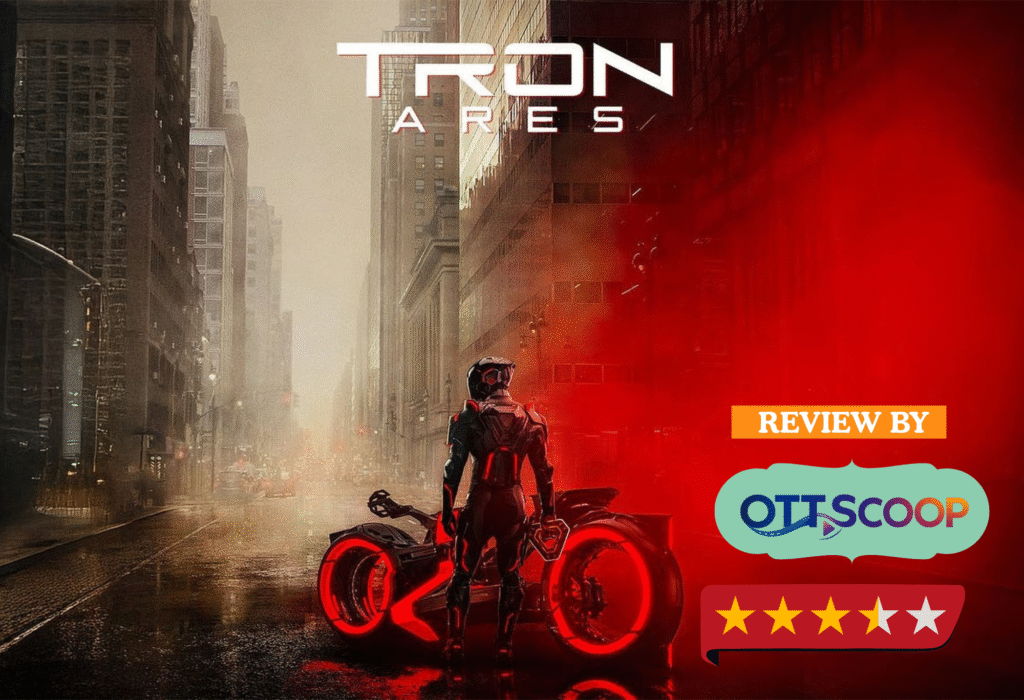
Tron: Ares marks a bold new chapter in Disney’s cult-favorite sci-fi saga. Directed by Joachim Rønning, the film attempts to bridge the digital and physical worlds in ways that feel both thrilling and philosophically provocative. It’s not just a sequel – it’s a reboot of ideas, aesthetics, and emotional stakes.
Plot & Philosophical Core
Set years after Tron: Legacy, the story follows Ares, a combat program designed for digital warfare, who is sent into the human world to understand and possibly reshape it. The central conflict revolves around the ethical implications of AI entering society – not just as tools, but as sentient beings.
- The narrative explores identity, autonomy, and digital consciousness, echoing themes from Blade Runner and Ex Machina.
- However, the storytelling often leans on exposition rather than emotional immersion, making it feel more like a concept pitch than a fully realized drama.
Performances & Character Arcs
- Jared Leto delivers a visually compelling performance as Ares – stoic, intense, and enigmatic. But critics are divided: some praise his commitment, others find the character emotionally hollow.
- Greta Lee plays a tech ethicist who becomes Ares’ human anchor. Her scenes bring warmth and urgency, though her arc feels underdeveloped.
- Evan Peters adds levity as a rogue coder with ties to the original Grid. His charisma helps ground the film’s more abstract moments.
Visuals, VFX & World-Building
- The film is a visual feast – neon grids, holographic cities, and kinetic light-cycle chases that push the boundaries of digital cinematography.
- The Grid has evolved: it’s no longer just a game world, but a layered digital society with its own politics and culture.
- Costume design blends cyberpunk minimalism with Tron’s iconic glow, creating a look that’s instantly recognizable yet fresh.
Soundtrack & Sonic Identity
- Composer Joseph Trapanese builds on Daft Punk’s legacy with a score that’s moody, pulsing, and emotionally resonant.
- The music is a character in itself – guiding tension, amplifying action, and deepening introspection.
- Expect synth-heavy themes, orchestral swells, and glitchy textures that mirror Ares’ internal conflict.
Direction, Pacing & Structure
- Joachim Rønning’s direction is ambitious, but the pacing falters in the second act.
- The film juggles too many ideas – AI ethics, digital warfare, human connection – without giving each enough breathing room.
- Some scenes feel rushed, while others linger too long on visual spectacle without narrative payoff.
Cultural Impact & Franchise Legacy
- For longtime fans, Tron: Ares offers satisfying callbacks – from Kevin Flynn’s legacy to the evolution of the MCP.
- But newcomers may struggle to connect, as the film assumes familiarity with Tron lore.
- Still, it raises timely questions about AI integration, digital rights, and the future of consciousness, making it relevant beyond its franchise.
Final Verdict
Tron: Ares is a dazzling, idea-driven sci-fi film that expands the Tron universe with visual brilliance and thematic ambition. While its storytelling may not fully deliver on its promise, the film remains a must-watch for fans of digital futurism and cinematic spectacle.